
Frank Billows was killed in action in Salonika (modern Thessaloniki) ,Greece on 24th April 1917, aged 24. He is listed on Skipton’s War Memorial and on the memorial brasses in Holy Trinity. He is buried in the Regional unit of Kilkis, Central Macedonia, Greece in the Doiran Military Cemetery very close to where he died.
He was posthumously awarded the “1914-15 Star” in 1919, along with the British War Medal and Victory Medal.
He served his apprenticeship as a printer at the Craven Herald, later moving to Blackburn where he was a ringer at the parish church (now Blackburn Cathedral). He enlisted in Blackburn is September 1914. He also was active in the Handbell Ringers Association connected with Holy Trinity and played cricket with the Skipton Church Institute.
Frank was a private in the 10th Devonshire Regiment (Service Battalion), which were formed at Exeter on 25th September 1914 as part of the Third New Army (Kitchener’s 3rd Army, or K3) and then moved to Stockton Camp, Salisbury Plain as part of the 79th Brigade of the 26th Division and then moved to Bath and the Sutton Veny (Apr – Sep 1915). After mobilising they landed in Boulogne on 23rd September 1915 and then moved with the division to Salonika and engaged in various actions against the Bulgarian forces including The Battle of Horseshoe Hill (10-18 August 1916) and the Battles of Dorain (24-25 April and 8-9 May 1917).
His father, William Billows, was also a ringer at Holy Trinity. The family lived in Primrose Hill and then in Granville Street – one sister still lived there in 1962, where father William died in 1945 and mother Emily died in 1949.
The following article was in the Craven Herald on 10th December 1915:
A SKIPTON SOLDIER WITH THE MEDITERRANEAN FORCE
Mr. and Mrs. W. Billows, of Granville Street, Skipton, have received an interesting letter from their son, Pte. Frank Billows, who joined Kitchener’s Army shortly after the outbreak of war, and has been on active service in France for some months. The communication is dated November 19th, and is headed Mediterranean Expeditionary Force. In it Pte. Billows states:-
“You will see that I have changed my address and have left France for good. I wish I was only at liberty to tell you where I have been and what I have seen, but we are not allowed. We have not yet finished our journey, and what our destination is we do not know.
We had a train journey of two days and three nights and travelled in cattle trucks. They were very fair and not so bad as the ordinary French carriages. The first day the train went so slow that we rode on the top of the waggons, and every time it stopped we played football. We were supplied with rum and coffee at stations, and also got a wash.
The country we passed through was lovely. One day we saw nothing but vineyards, and then we got in a hilly part and noticed snow-capped mountains. I saw oxen working in the fields, and the people had a peculiar way of washing clothes-in the river with a board to rub them on.
We had about an hour’s march from the train to the boat and soon got on board. We slept in bunks and each had a separate bed. It was grand to have a good night’s rest, and I slept soundly. When we had been sailing half-an-hour many men were ill. The boat was pitching and tossing, and that did the trick.
On the ship we have had good food, including porridge. When we arrived at port I saw sights I had never seen before. We have now left there and gone to another port to coal. As soon as we got in the harbour we were surrounded by boats containing fruit sellers. Some of the natives were swimming near the boat and diving for money thrown into the water. They were like ducks. A police boat tried to run one down, but he simply dived and came up at the other end.
The coal business, a real sight, was done by natives. They carried the coal in baskets and made a continual chain, working hour after hour-and they did it at the double. They made a horrible noise, and every time they pulled a rope they commenced singing, but it was the same few bars every time.
We were taken on shore for a short march, just to stretch our legs. Where the natives lived there were dozens of goats and poultry about the houses.”
Pte. Billows is one of three brothers all on active service. The others are in France, the last to cross being Gunner R.G. Billows, of the Garrison Artillery, who left England a few weeks ago.
Doiran was roughly at the middle of a line occupied by the Allies in Macedonia where the Salonika force suffered heavy casualties during fierce fighting during 1917-1918. Graves at the Doiran Memorial almost entirely contain the remains of men from 22nd and 26th Divisions most of whom lost their lives in the 1st Battle of Doiran over April and May 1917: Frank was killed in action on 24th April 1917 (the first day of the battle). The British infantry began its attack on the night of 24–25 April – 12 companies attacked the Bulgarian 2nd Brigade and after a bloody fight managed to take the “Nerezov”, “Knyaz Boris” and “Pazardzhik” positions. After a Bulgarian counter-attack the British were repulsed with heavy casualties and by 8 pm had retreated. The British assaults on the right and central fronts were also repulsed with heavy casualties after help from the Bulgarian artillery. There were 12,000 casualties for the British, and 2,000 Bulgarians.
The following article appeared in the Craven Herald on 18th May 1917:
PRIVATE F. C. BILLOWS REPORTED MISSING
Skipton people will be sorry to hear that Pte. Frank Crossland Billows, Signaller’s Section Devonshire Regiment, son of Mr. and Mrs. W. Billows, 8 Granville Street, Skipton, is officially reported as missing since April 24th – 25th, when he is believed to have taken part in an engagement in the Balkans. Twenty-four years of age he joined up in September 1914, and went out in August 1915 to France, where in November of the same year he was transferred to Salonika. Last year he suffered from a septic knee and was nursed in a Malta hospital. He served his apprenticeship as a printer at the offices of the ‘Craven Herald’, and at the time of his enlistment was in the employ of a Blackburn firm of printers. He was one of the sadly diminishing number of young men who formed a Handbell Ringers’ Association in connection with the Skipton Parish Church, and was afterwards a bellringer at the Blackburn Parish Church, and a member of both the Yorkshire and Lancashire Association of Change Ringers. He also at one time played cricket with the Skipton Church Institute.
On the same day, this was in the West Yorkshire Pioneer:
SKIPTON SOLDIER REPORTED MISSING
Pte. Frank Crossland Billows, of the Signallers Section, Devonshire Regiment, son of Mr. W. Billows, of 8, Granville Street, Skipton, is officially reported missing since April 24th and 25th in Salonika. Pte. Billows, who is 24 years of age, enlisted in September, 1914, being transferred in November 1915, to Salonika. He was suffering from a septic knee last year, and was admitted to hospital at Malta. He served his apprenticeship as a printer at the ‘Craven Herald’ office, but on joining he was in the employ of a Blackburn firm. He was one of the Parish Church hand bell ringers, and afterwards a ringer at the Blackburn Parish Church, and also a member of both the Yorkshire and Lancashire Association of change ringers. He was also a playing member of the Skipton Church Institute Cricket team.
He is buried in the Regional unit of Kilkis, Central Macedonia, Greece in the Doiran Military Cemetery very close to where he died (there are 889 casualties here almost entirely from the fighting in April/May 1917), grave reference VI H 4 (see photo, he is at the left hand end of the 3rd row). He was posthumously awarded the “1914-15 Star” in 1919, along with the British War Medal and Victory Medal.

The following article was published in the Craven Herald on 15th June 1917:
SKIPTON’S ROLL OF HONOUR – PRIVATE FRANK CROSSLAND BILLOWS
In our issue of May 18th, we recorded the fact that Pte. Frank Crossland Billows, Signallers’ Section, Devonshire Regiment, son of Mr. and Mrs. W. Billows, 8, Granville Street, Skipton, was officially reported as missing since April 24th-25th after taking part in an engagement in the Balkans. At the time the parents had the worst fears for the fate of their son, and these, we are sorry to say, have now been confirmed by the receipt of an ‘In Memoriam’ card from the commanding officer of the regiment which reads as follows:-
“No. 15543 Pte. F.C. Billows. Killed In Action, Apri1 24th 1917.
“With deepest sympathy from the Commanding Officer and all ranks of the —– Battalion Devonshire Regiment.
“R. M. RAYNSFORD, Major. Commanding —– Devons.”
The crest of the Regiment is reproduced on the card, together with the Regimental Colours covered by the Cross.
Twenty-four years of age, Pte Billows enlisted in September 1914, and went in August 1915 to France, from where, in November of the same year, he was transferred to Salonika. Last year he suffered from a septic knee and was nursed in a Malta hospital. He served his apprenticeship as a printer at the offices of the ‘Craven Herald’, and at the time of his enlistment was in the employ of a Blackburn firm of printers. He was one of the sadly diminishing number of young men who formed a Handbell Ringers’ Association in connection with the Skipton Parish Church, and was afterwards a bellringer at the Blackburn Parish Church, and a member of both the Yorkshire and Lancashire Associations of Change Ringers. He also at one time played cricket with the Skipton Church Institute.
Mr. and Mrs. Billow have also received the following letter from Albert E. Ham:- “On the night of the 24th (the night of the attack) Frank left me, as cheerful as he always was, to go across to the enemy trenches, but I am sorry to say he did not turn up in the morning, nor had anyone any news of him. Have had it officially from our headquarters that he is reported missing, but still there’s just the possible chance that he may be a prisoner of war, which I sincerely hope is the case. He was a fine fellow and as brave as the best. I cannot speak too highly of him, and I sympathise with you. Should I receive further particulars I shall at once inform you with the greatest pleasure.”
P. Burton, one of his pals, has also written expressing his sorrow at the sad news. “I know you will feel very anxious,” he adds, “but I sincerely hope that you will soon get good news of him; it is possible that he is a prisoner. I hope so.”
Writing to Mr. and Mrs. Billows, Capt. C. K. Martin, O.C. ‘C’ Company says:- “Please accept my deepest sympathy with you in your anxiety about your son. It was after a night attack over very hilly and difficult ground that he was reported missing. We brought in all our casualties that we could find, and your son was not among them, so of course there is a small hope that he has been taken prisoner. I do trust this is the case, and that you will, before very long, get definite good news of him. We hear the Bulgar is very good to his prisoners, especially the British. Your son has been a great ‘stand-by’ in the Company, and we shall all miss him very much. He was among the foremost, carrying on most gallantly the night we lost him.
A letter of sympathy has also been received from H.G. Edwards, deceased’s platoon sergeant, who says:- “Like many others, he (Pte. Billows) lived up to the Regimental motto of ‘Ever Faithful’ even to the last. I need hardly say how highly we thought of him; he being a signaller was sufficient to prove that we trusted and thought well of him. His platoon join me in expressing our deepest sympathy to you in your great bereavement.”
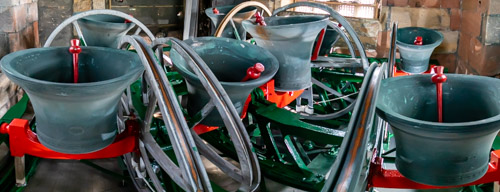
The Vicar of Blackburn, (the Rev. Thos. R. Sale) has also written as follows:- “We all heard with sorrow of the death of your son, F. C. Billows, and send our deepest sympathy. He has died for the defence of home and country, and for the freedom of Europe and the world, and we are proud of him as of the other brave lads who have given their lives. He was, as you know, one of our band of ringers in the Parish Church belfry, and a muffled peal was rung for him last night on the Parish Church bells. He was the first of our ringers to give his life, though there are several more on active service. I was myself present in the belfry and we had a short service of prayer before the peal commenced. We were remembering you and yours at the time. He was a regular ringer and punctual in his attendance. We understand that his father is also one of the ringing craft. May we all meet when that is accomplished for which our bells stand!”
Mr. and Mrs. Billows have also received an official intimation of the sad news.
A similar article was in the West Yorkshire Pioneer on the same day:
SKIPTON – PTE. F.C. BILLOWS REPORTED KILLED
Mr. and Mrs. W. Billows, of 8, Granville Street, Skipton, a short time ago received official information that their son, Pte. Frank Crossland Billows, Signallers Section, Devonshire Regiment, had been missing since April 24th-25th, when he was believed to have taken part in an engagement in the Balkans. A funeral card has been received by the parents of Pte. Billows from the Commanding Officer, stating that their son was killed in action on April 24th. He also sends his deepest sympathy and that of all ranks. Twenty-four years of age, he joined up in September, 1914, and went in August, 1915, to France, from where, in November of the same year, he was transferred to Salonika. Last year he suffered from a septic knee and was nursed in a Malta hospital. He served his apprenticeship as a printer at the offices of the ‘Craven Herald,’ and at the time of his enlistment was in the employ of a Blackburn firm of printers. He was one of the sadly diminishing number of young men who formed a Handbell Ringers’ Association in connection with the Skipton Parish Church, and was afterwards a bellringer at the Blackburn Parish Church and a member of both the Yorkshire and Lancashire Association of Change Ringers. He also at one time played cricket with the Skipton Church Institute.
Captain C. R. Martin in a letter to Mr. and Mrs. Billows states:- “Please accept my deepest sympathy with you in your anxiety about your son. It was after a night attack over very hilly and difficult ground that he was reported missing, We brought in all our casualties that we could find, and your son was not amongst them, so, of course, there is a small hope that he has been taken prisoner. I do trust that is the case, and that you will before very long get definite and good news of him. We hear the Bulgar is very good to his prisoners especially the British. Your son has beet a great stand by in the company, and we shall all miss him very much. He was among the foremost, and carrying on most gallantly the night we lost him.”
Rev. Thomas R. Sale, vicar of the Blackburn Parish Church. writes:- “We all heard with sorrow of the death of your son, F.C. Billows, and send you our deepest sympathy. He has died for defence of home and country, and for the freedom of Europe and the world, and we are proud of him as of all the other brave lads who have given their lives. He was, as you know, one of our band of ringers in the Parish Church Belfry, and a muffled peal was rung for him last night on the Parish Church bells. He was the first of our ringers to give his life, though there are several more on active service. I was myself present in the belfry, and we had a short service of prayer before the peal commenced. We were remembering you and yours at the time. He was a regular ringer and punctual in his attendance. We understand that his father is also one of the ‘ringing craft.’ May we all meet when that is accomplished for which our bells stand.”
Albert E. Hamm, a pal of Pte. Billows, states:- “As I am your son’s best friend, I thought I would acquaint you with the sad news concerning him, but it is with deepest sorrow that I do so. On the night of the 24th (the night of the attack), Frank left me as cheerful as he always was, to go across to the enemy trenches, but I am sorry to say he did not turn up in the morning, nor had anyone any news of him. I have had it officially from our headquarters that he is reported missing, but still there is just the possible chance that he may be a prisoner of war, which I sincerely hope is the case. He was a fine fellow, and as brave as the best. I cannot speak too highly of him, and I sympathise with you. Should I receive further particulars I shall at once inform you with the greatest pleasure.”
Another ‘pal’ named P. Barton, writes:- “I thought I would just write to let you know how sorry I am to hear the bad news of Frank. I know you will feel very anxious, but I sincerely hope that you will soon get good news of him. It is possible that he is a prisoner. The last letter I had from him was in February. I should like to know if you hear any news of him. Assuring you of my deepest sympathy and hoping for the best.”
There were also entries in the Craven Herald on the anniversary of his death in 1918 and 1919 that said “Missed by those who loved him best.” From Father, Mother, Brothers and Sister.